Stage Manager
The Clean House
By Sarah Ruhl
Marisa Figueras - Lighting Programmer

"Buying In" to the Design
While lighting programming may seem like a purely a technical assisting position rather than a creative position, it definitely requires a creative eye. As a lighting programmer, it's my job to understand what the lighting designer is trying to create and bring it to life. This means being able to make creative choices and take input, working collaboratively with both our inputs. As Ben and I worked together and I learned more about his style and vision, I was able to anticipate what he wanted and make choices to present to him rather than waiting to be told what fixtures to turn on or what colors to choose from. This fluidity in our communication and creativity made our work together easy and seamless.


Communicating in Tech
Two of the many skills I bring from my SM background into my other work are my abilities to facilitate communication and adapt to the needs of the room. It is typical for the lighting designer to speak directly with the PSM for tech, our LD, Ben, preferred to be off headset during tech to better hear me and our ALD while working, as well as to communicate with our Projections Designer at the table over about looks and needs. I adapted to talking with Grace, our PSM, whenever I had the information that she needed - discussing cue numbers, timings, and intentions with her. I had the understanding of the work and the dynamic to communicate these things, and she had the trust in my knowledge to talk with me. However, I also knew when to get Ben on headset to discuss more nuanced questions or moments.
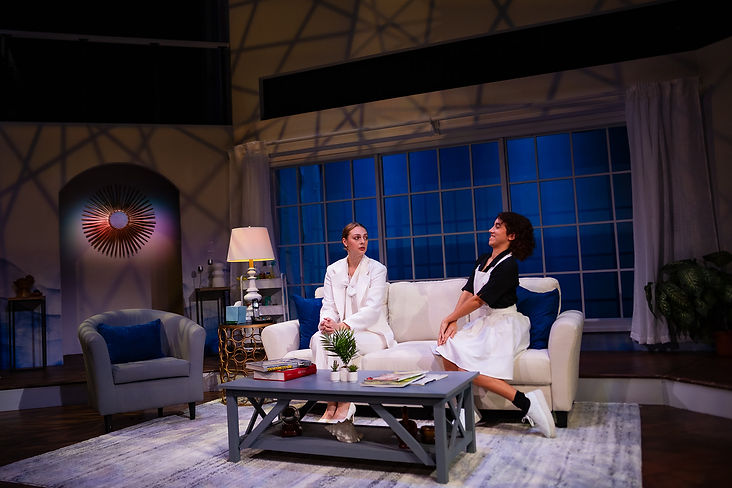
Production Photos
all photos by Drew Lofredo